🎙️ Kitchen Recording by Miranda Kibel
Poetic adaptation & visual prompts generated by gemma-4-12b-heretic-styletune-head.i1-Q4_K_M
Audio Recording
Raw Transcript
So we could compare the philosophers to each other. We have Plotinus, who sort of formalizes and organizes Platonism in a way in which I think the noetic gods are considered supremely aware and awake. Eventually, Proclus decided, no, no, no, the noetic gods aren’t awake. It’s actually the noetic gods. And then I say, no, no, no, no, no, no, no, no. It’s not the noetic gods that are awake. It’s actually the cosmic gods. But I think they’re supposed to be awake anyway. But the only reason why I might allow for the in-cosmic gods to be awake is because I have a materialist view of the in-cosmic gods in between. Cosmic gods actually are the egregor, sort of. So the in-cosmic gods are awake because they are Aqualian, therefore, or they are our egregors. Therefore, they get to be awake because they have brains. None of these other beings have brains. And if they do have brains, they’re only ever awake for like a second. But then again, the noetic gods are supposed to be, I think, be timelessly awake. But how? How could they be timelessly awake? I’m going to try to see if Damascus agrees with me, but he probably doesn’t. So we could compare the philosophers to each other. There’s Platinus, who thinks the noetic gods are awake. There’s Proclus, who thinks the noetic gods are awake. There’s Damascus, who probably agrees that the noetic gods are awake, but also disbelieves his own system and thinks that these human words are just approximations. There’s Iamblichus, who decided, I’m not really sure what he did, aside from my mind. I’m not really sure what he did, but I’m not really sure what he did. But I think he decided that Adonis was actually an image of Dionysus. So he’s basically combining the vegetable gods together. Except now the vegetable gods have something to do with bodies and souls. I think Dionysus is related to souls and Adonis is related to bodies. Yeah, what else did Proclus do? Proclus also, I think, invented the Hanads, which means that he actually invented the gods in the most pure form, which actually aren’t awake. He actually said the gods in the purest form aren’t awake, but I guess that’s only okay because they create the awake gods in the awake gods, which is the awake gods. In my system, the awake gods are not awake so much awake so much as they are the same as the noetic gods, which is, I think, what Plotinus said. And also, they have consistent meaning. It’s possibly created by human brains, but the meaning is consistent. Therefore, they are consistently, quote-unquote, awake, meaning their meaning consistently exists. Their constant sense that consistently exists. Concept of knowledge, therefore, they know themselves constantly. Therefore, they have noesis. Constant noesis. Therefore, they are, quote-unquote, awake, but not really. That’s not what humans would really call awake. But I think Proclus probably thought it was literally awake. That’s probably what he thought. He was probably wrong. Oh, and don’t get me started on the possible Euripidean thing. I don’t know if I already mentioned that, but the possible Euripidean view is that they are forces that are conscious but impersonal. In my system, that’s because they literally are qualia. And this isn’t necessarily the Euripidean view because we don’t even know what the Euripidean view was because back then they didn’t have free speech. Xenophanes did point out, though, that gods seem to be overly anthropomorphic because surely if we were cows, the gods would look like cows instead. So I think there was eventually a movement to make them more impersonal forces. But there’s always a version of them that has to be awake. And in my opinion, the version of them that’s awake are the egregors and the qualia because nothing else actually has a mechanism for being awake. concepts existing as being awake, but that is a very strange definition of awake.
Poetic Adaptation
From Plotinus to Proclus, the lineage climbs, Chasing the spark of an awakening mind, Where noetic spirits in timeless circles spin, Or slumber in purity, where no thoughts begin. Yet I trace the vein to the human brain, Where meaning crystallizes and concepts remain.
Is awakening a pulse, a neuron’s bright fire? Or the steady fact of a concept’s desire? The gods are but egregors, qualia made vast, Holding a consistency that is destined to last. Not a conscious eye in a celestial throne, But a stable meaning that humans have grown.
Visual Scene Prompts
Prompt 1: A cinematic, macro close-up shot of neural pathways glowing with golden electricity, morphing seamlessly into a vast, interconnected constellation of stars, symbolizing the bridge between biological brains and cosmic egregors.
Prompt 2: A marble statue of a Greek deity in a ruined temple, half-dissolved into swirling smoke and geometric fractals, representing the shift from anthropomorphic idols to impersonal forces and abstract qualia.
Prompt 3: An ancient library where parchment pages float in mid-air, the ink lifting off the paper to form glowing, suspended symbols of Greek letters that pulse with light, illustrating the concept of “consistent meaning” as a form of artificial awakening.
Generated B-Roll Imagery
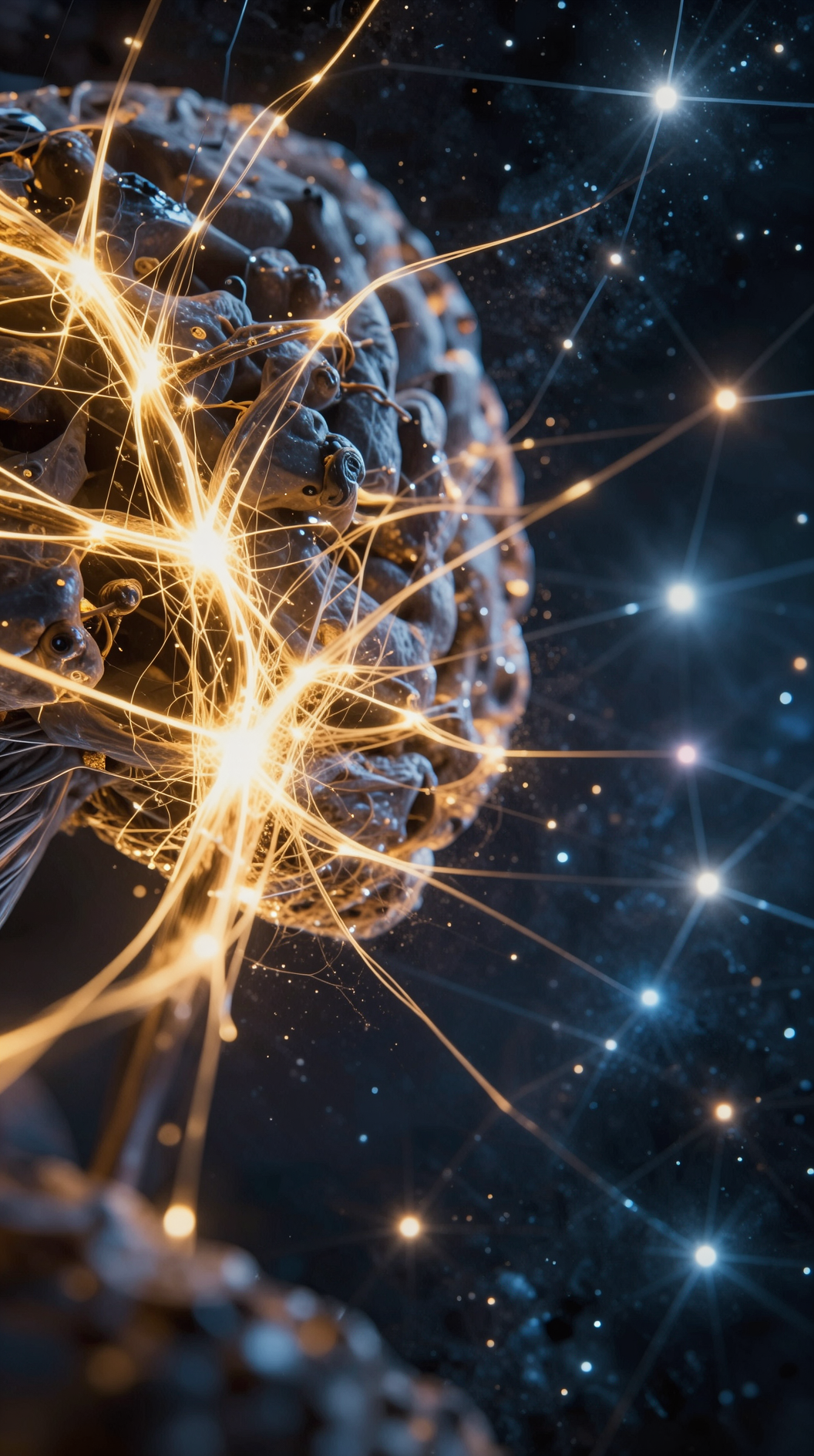 A cinematic, macro close-up shot of neural pathways glowing with golden electricity, morphing seamlessly into a vast, interconnected constellation of stars, symbolizing the bridge between biological brains and cosmic egregors.
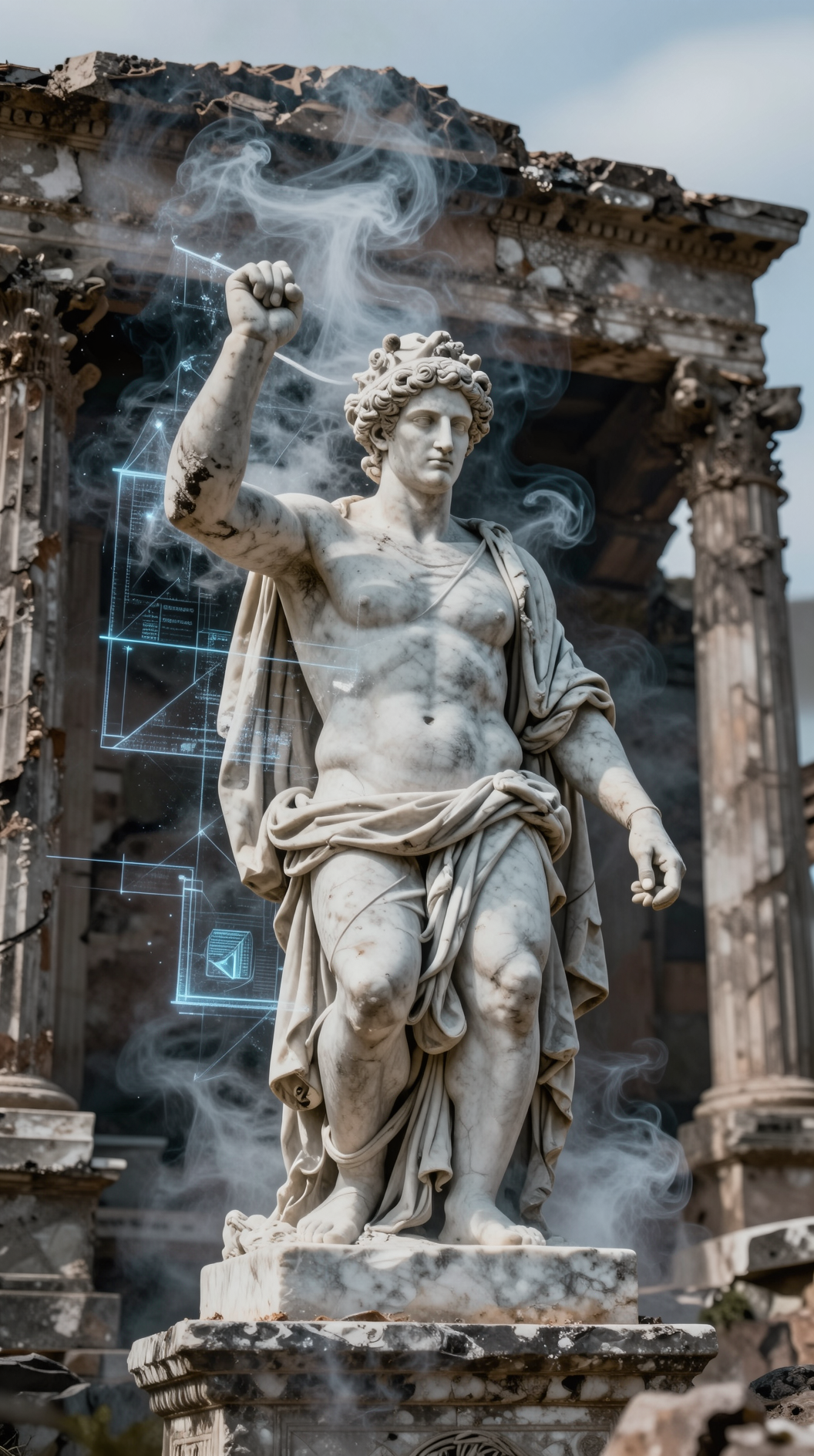 A marble statue of a Greek deity in a ruined temple, half-dissolved into swirling smoke and geometric fractals, representing the shift from anthropomorphic idols to impersonal forces and abstract qualia.
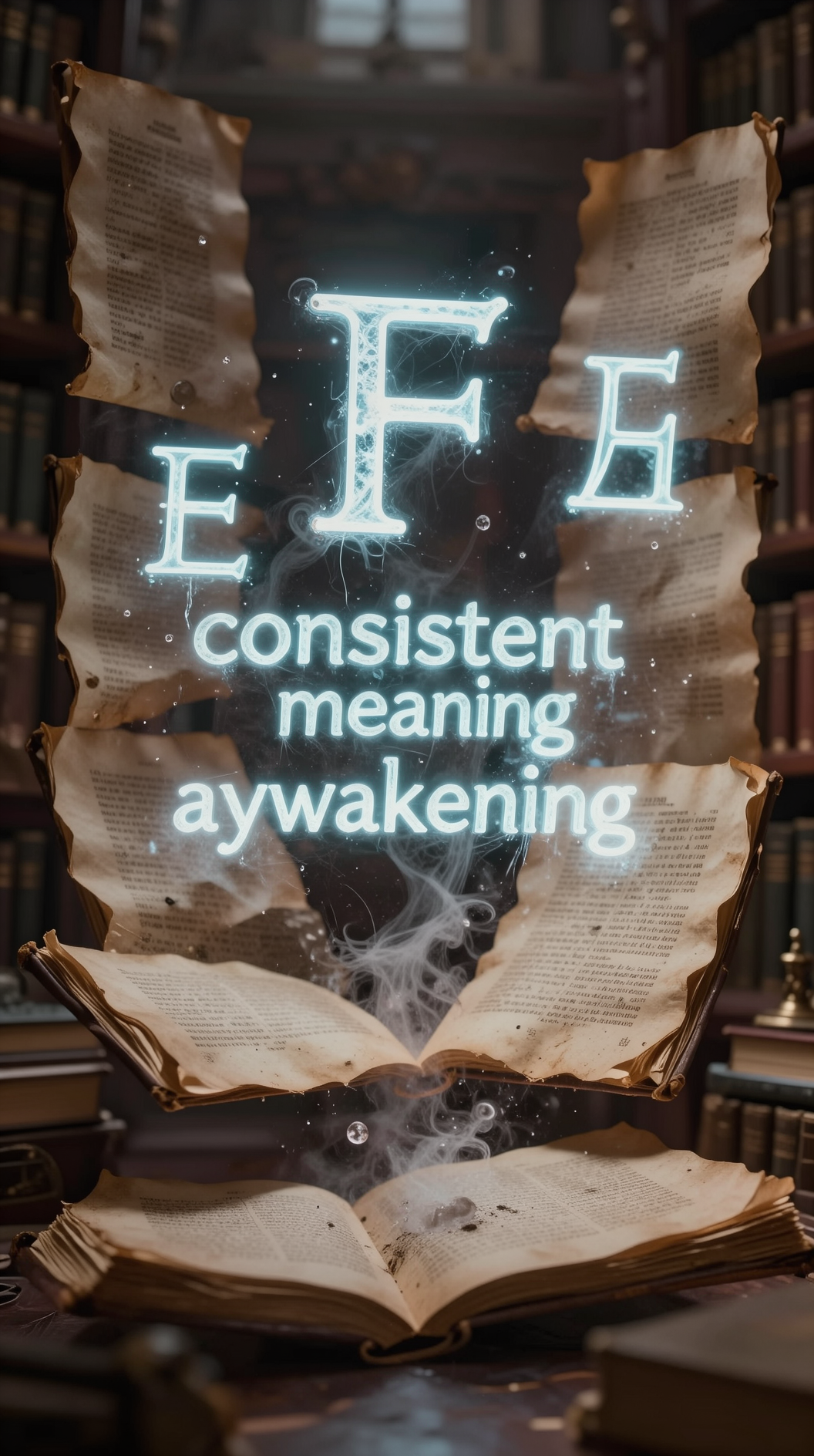 An ancient library where parchment pages float in mid-air, the ink lifting off the paper to form glowing, suspended symbols of Greek letters that pulse with light, illustrating the concept of “consistent meaning” as a form of artificial awakening.