🎙️ Kitchen Recording by Miranda Kibel
Poetic adaptation & visual prompts generated by gemma-4-12b-heretic-styletune-head.i1-Q4_K_M
Audio Recording
Raw Transcript
So the issue now I’m finding is that Proclus, I think, did give like root adverbs for the Hanads, but they’re not very objective. They’re only objective within the system. Like, for example, I think the root adverb for Dyniasis is pretty much like the word meaning dividedly. Here’s the problem with that. This really refers to the division of like soul and principle or like certain principles into particulars. But in that case, it might be better to say particularly, but I don’t think particularly. It’s actually a root adverb because I think it refers to the process of the division of the principle. But we don’t even think like that anymore. We just think of the principle as abstraction. You could argue the abstraction is fundamental, but even still, divide? What is being divided? We do not think of the principle as dividing itself. If anything, I would say it’s like an object and it’s instantiating itself. So listen to me. So listen to me. It’s kind of like there’s, it’s kind of like ontic structural realism or something similar where it’s sort of like a set of structural principles. I mean, you have the principle of soul, the principle of intellect, and Zeus is the god of the united intellect, the united soul. Then Dyniasis is the god of the particular intellect and the particular soul, but his root adverb isn’t, I don’t think it’s particularly, I think it’s dividedly. Unless particularly is also a translation, I’ll have to check, but I think it’s just dividedly, which is weird, because it basically has to do with the fact that Neoplatonism believes or some sort of process in which the root structures, the united principles become divided particulars. But I’m not sure division is a very good word for that. Because what is being divided? I don’t think, because these principles are kind of like abstractions. It’s a very weird top-down way of looking at the world. It’s very upside down compared to how we typically look at it. So I don’t know if division is a very good model here. I think nowadays in object-oriented programming, we don’t call it division, we call it instances. So maybe instantiation is a better word, or even multiplication. Because why are we calling it division? It’s multiplication. I think it’s because the form contains all possibilities. So it’s kind of like you’re dividing the possibilities amongst the forms. But I don’t know, that seems potentially culture-bound. I think the actual root adverb is supposed to possibly be diagonal. But I don’t know, that seems to be diagonal. So do not give up their own particulars, but do insist on erasing other cultures’ particulars.
Here are the requested sections based on the lecture transcript.
Poetic Adaptation
The principle stands, a form in perfect rest, Not split in pieces, but in possibilities dressed. What we call “division” is a language of old, A story of breaking where unfolding is told.
The unity does not fracture or part, It multiplies outward from a single heart. Like code that instantiates a pattern anew, The many emerge from the one, singular view.
From the abstract root, the particulars flow, Not carved by a blade, but in multiplication’s glow. A top-down descent where the whole holds the seed, The many are mirrors of the principle’s deed.
Visual Scene Prompts
Prompt 1: A cinematic close-up of a single drop of water falling into a perfectly still pool, captured at high speed in slow motion, showing the moment the single drop multiplies into hundreds of concentric ripples that expand outward, hyper-realistic, 8k resolution. Prompt 2: A conceptual 3D visualization of a geometric fractal structure growing from a central core, where a single golden mathematical principle branches into infinite identical iterations, glowing with soft ethereal light against a dark void, architectural style. Prompt 3: An abstract artistic representation of “instantiation,” showing a translucent blueprint overlaying a physical object, where multiple identical ghostly figures emerge from a single solid pillar of light, surrealist style, dramatic chiaroscuro lighting.
Generated B-Roll Imagery
 A cinematic close-up of a single drop of water falling into a perfectly still pool, captured at high speed in slow motion, showing the moment the single drop multiplies into hundreds of concentric ripples that expand outward, hyper-realistic, 8k resolution.
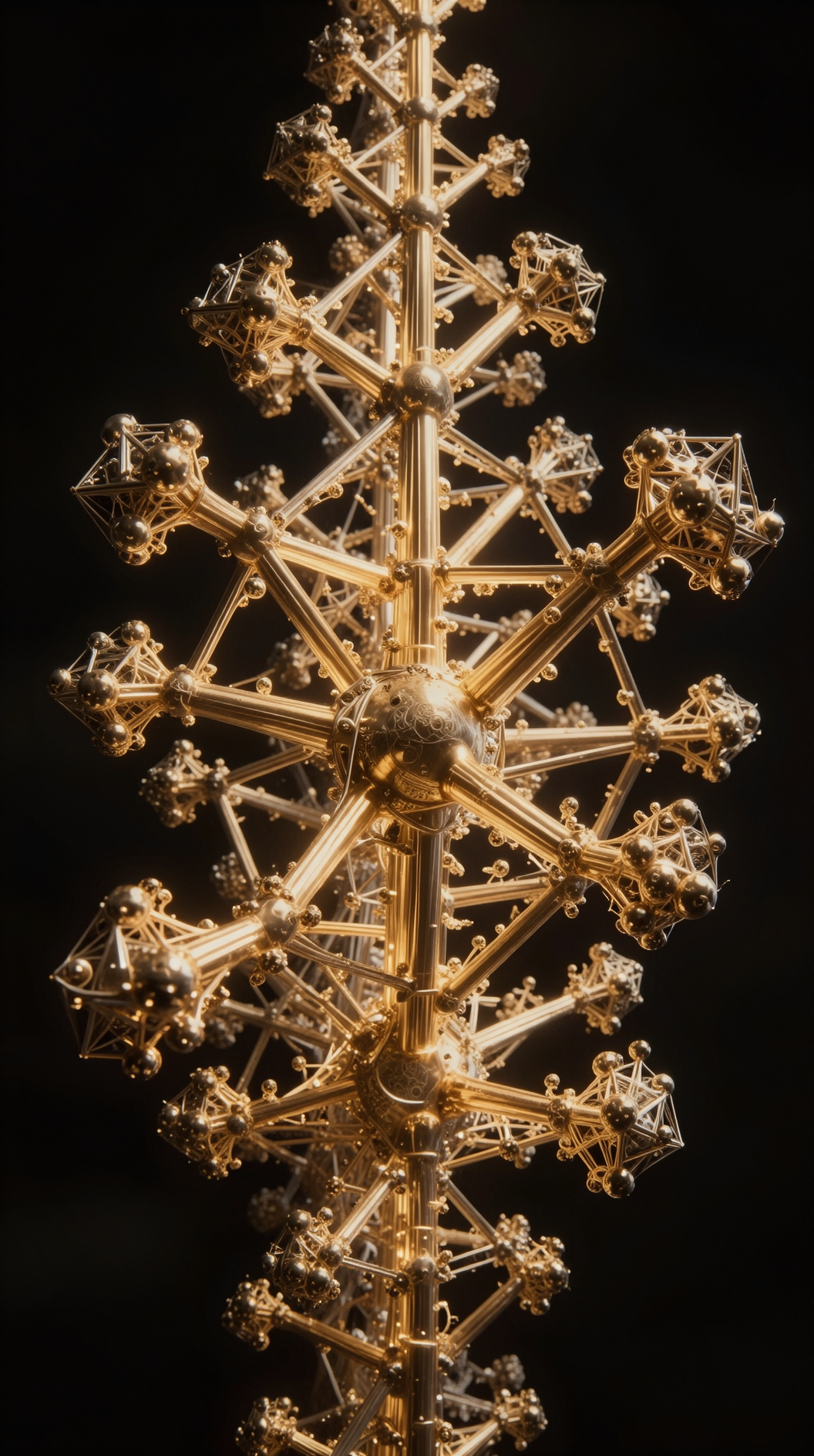 A conceptual 3D visualization of a geometric fractal structure growing from a central core, where a single golden mathematical principle branches into infinite identical iterations, glowing with soft ethereal light against a dark void, architectural style.
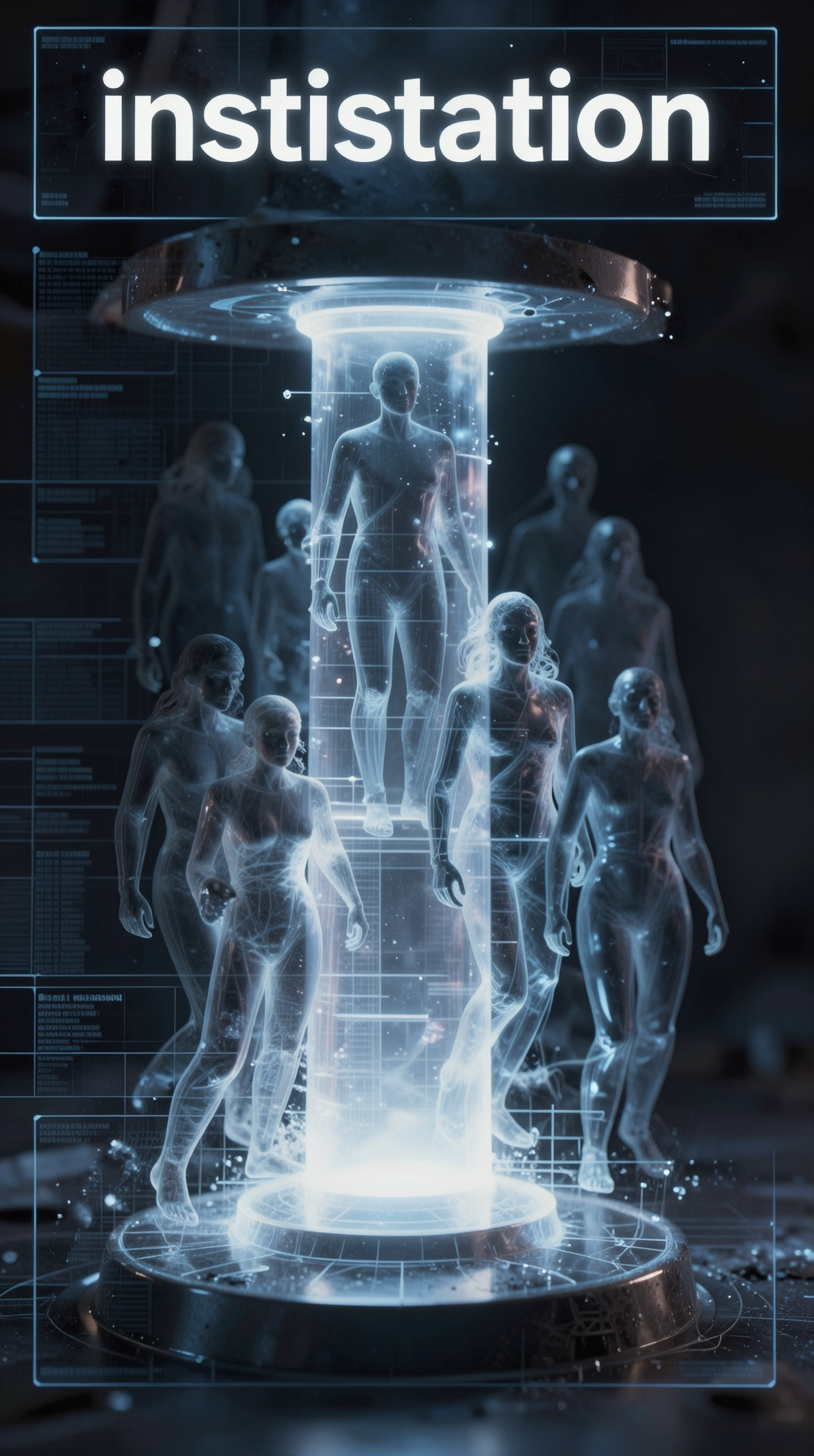 An abstract artistic representation of “instantiation,” showing a translucent blueprint overlaying a physical object, where multiple identical ghostly figures emerge from a single solid pillar of light, surrealist style, dramatic chiaroscuro lighting.