🎙️ Kitchen Recording by Miranda Kibel
Poetic adaptation & visual prompts generated by gemma-4-12b-heretic-styletune-head.i1-Q4_K_M
Audio Recording
Raw Transcript
So we have Edward Butler who dereifies the Naus by possibly taking awareness out of it, or at least saying that it’s not where the awareness is actually stored, or at least it’s not where it begins, but rather it contains the activity of the gods, which might actually mean it has awareness in it, but if so, it’s the awareness of the gods. And I think under one possible model, you could just say there is actually no awareness in the Naus, only activity of the aware gods who are aware in the one. It’s completely outside of time and beyond being, and yet it somehow has awareness. So the result of that is that we’ve now passed the buck of reification. Now, how does he justify all this? Well, he has this idea that who is the most fundamental quantity in all creation. So the gods cannot possibly be principles. They cannot possibly be what? No, they are who? But if you’re going to do that, you might as well just say that only human beings and animals are who, and maybe trees. You might as well just say, or maybe rocks, or just human beings and animals. You may as well say it’s the human beings and the animals who are the who’s. Nothing else is necessarily a who. And I think in Neoplatonism, the humans actually form these things called seiras, which means that there are several humans that are actually Heracles, sort of, or rather their souls come from Heracles. But wait, now the only thing I can see I can see I can see I can see I can see I can see Heracles, I can see Heracles, I can see Heracles, I can see Heracles, I am seeing Heracles, I am seeing Heracles, I am seeing a collection of humans. And yet, Butler said that the who is irreducible, like singular. And yet, all I’m seeing is a collection of people. I am not seeing just one god. I am seeing a collection of people. He’s going to reduce all creation to who? Then why is he reducing it to the Olympians? He basically just took Neoplatonism, edited it, and then used it to justify his logic. But the way in which he edited Neoplatonism may not actually make sense with Neoplatonism itself, because Neoplatonism is completely the reason why the nows is aware has to do with which stage the principles are doing stuff at. He basically just took the awareness out of the nows and then did not give it any capacity to exist, except for maybe just saying who’s are fundamental. But he also thinks that people are not who’s under a serialist framework. He has zero evidence under his own logic that who’s even exists. Well, I guess under his own logic, it works, but his own logic is circular. You do need like a materialist layer, but he’s just playing around with grammar. Also, he’s not even correct. I think he’s trying to apply this polytheism to India where it doesn’t even exist. India religion tends to be monist. He thinks that’s colonial. Meanwhile, he’s colonizing Indian religion by assuming that it should be absolutely hard polycentric polytheism.
Here are the requested sections based on the lecture transcript:
Poetic Adaptation
The Nous is stripped of its inner light, A hollow vessel, a stage of play, Where gods perform in the endless night, While awareness drifts a world away. No spark remains within the ancient mind, Only the echoes of a distant source, Leaving the substance of the soul behind, A phantom motion on a circular course.
But who is the ‘Who’ that births the seed? A singular point, or a crowd in disguise? The logic fractures, the premise bleeds, As individual faces meet the eyes. A patchwork of souls, a collection of men, Yet claimed as a deity, singular and grand, The grammar is twisted by a scholar’s pen, Building a castle on shifting sand.
Visual Scene Prompts
Prompt 1: A cinematic, wide shot of a translucent, ethereal Greek temple floating in a void beyond time, its marble walls glowing with faint golden energy but containing no internal light, symbolizing the Nous stripped of its own awareness. Prompt 2: A hyper-realistic close-up of a crowd of diverse human faces overlapping and merging into one another through a double-exposure effect, with faint Greek mythological symbols floating between them, representing the tension between the singular ‘Who’ and the collection of souls. Prompt 3: A conceptual art piece showing an ancient Sanskrit manuscript being overwritten by glowing Western script, with the ink bleeding into the parchment like vines, illustrating the critique of colonial interpretation and the imposition of Western polytheism on Indian monism.
Generated B-Roll Imagery
 A cinematic, wide shot of a translucent, ethereal Greek temple floating in a void beyond time, its marble walls glowing with faint golden energy but containing no internal light, symbolizing the Nous stripped of its own awareness.
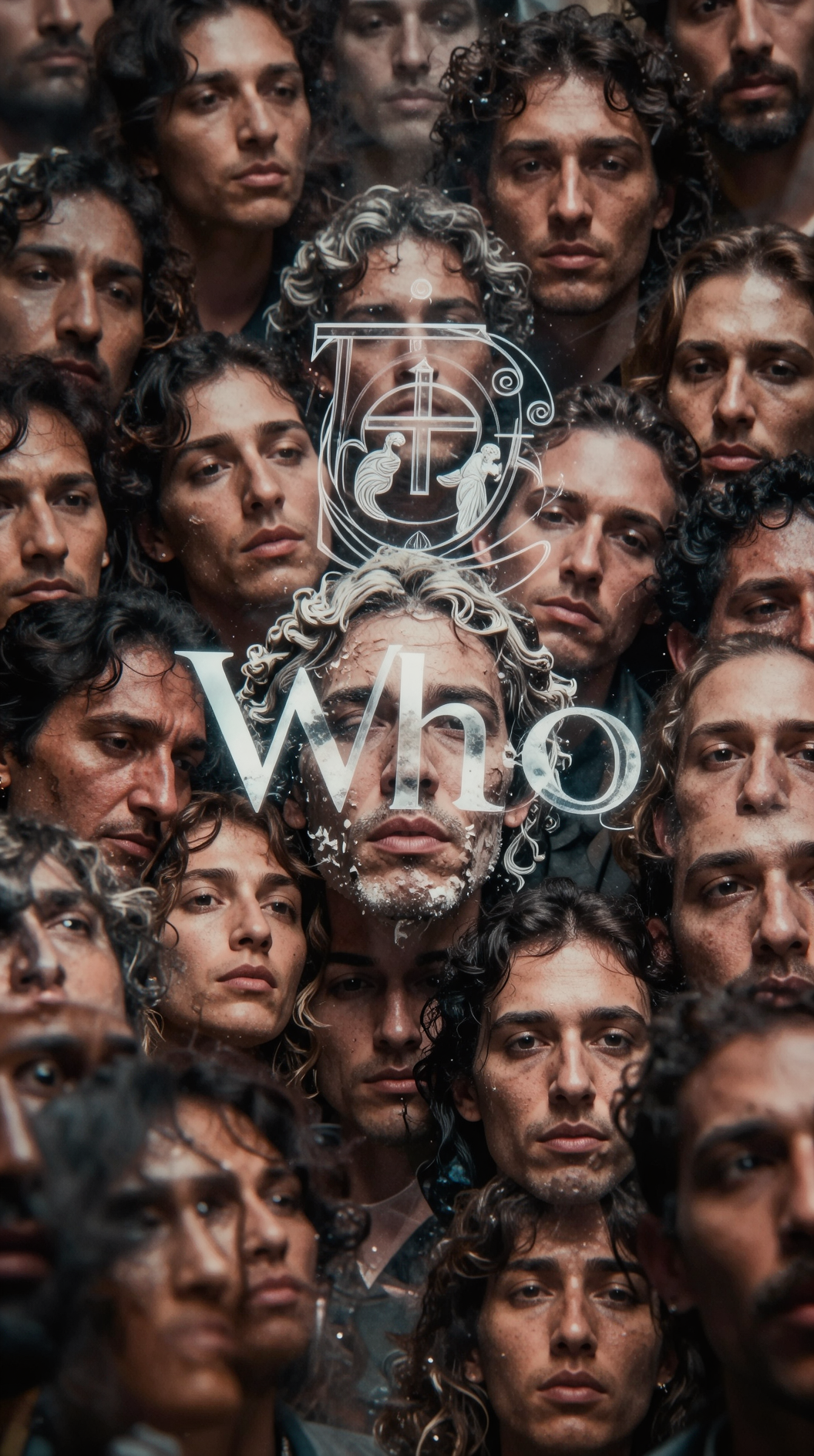 A hyper-realistic close-up of a crowd of diverse human faces overlapping and merging into one another through a double-exposure effect, with faint Greek mythological symbols floating between them, representing the tension between the singular ‘Who’ and the collection of souls.
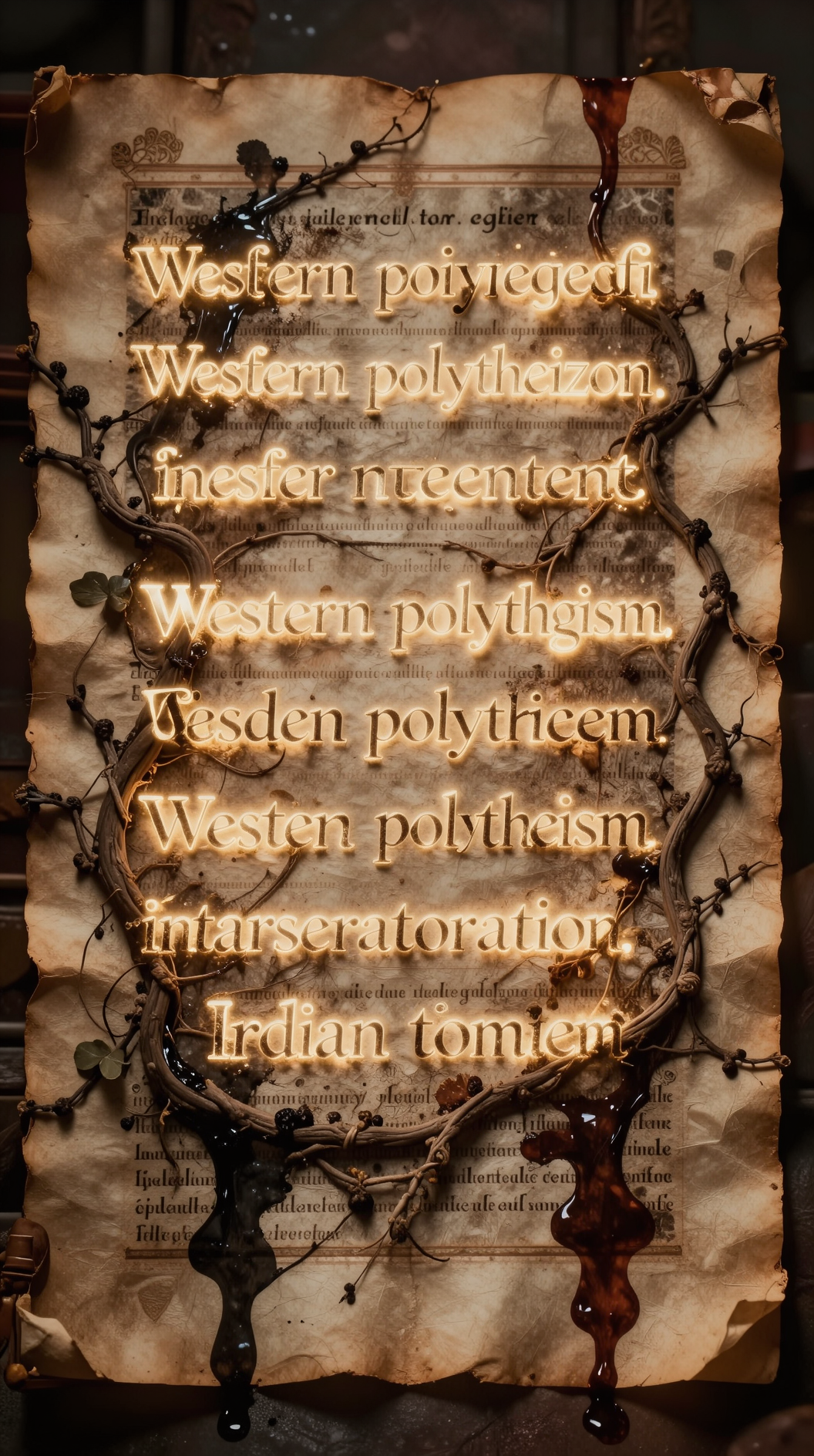 A conceptual art piece showing an ancient Sanskrit manuscript being overwritten by glowing Western script, with the ink bleeding into the parchment like vines, illustrating the critique of colonial interpretation and the imposition of Western polytheism on Indian monism.